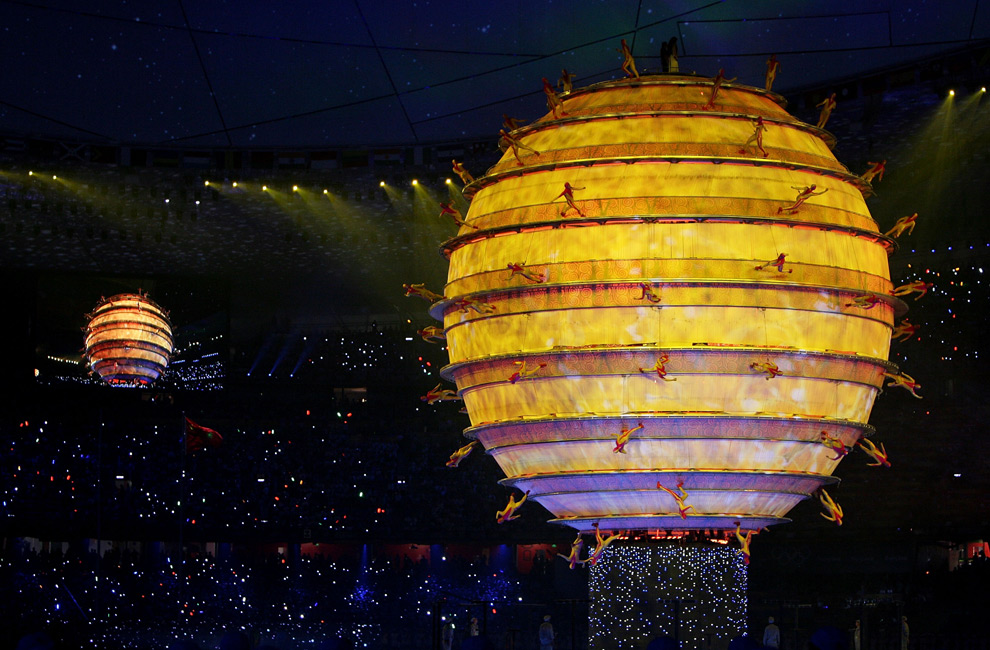
Early August 2008 seemed to be consumed with the joy surrounding the upcoming Olympics. Despite the bouts of opposition reports surrounding human rights issues clashing with the idea of the Olympics (opposition which I do not recall being so popular in 2001), the mass media could not help but glorify the approaching Games. And, come opening ceremonies, this glorification seemed well placed; the spectacle left the world everything short of speechless. That special kind of happiness that stems from forgetting all of the politics of the world hung in the air. But, it was short-lived; not too long after, discussions of dancers on glowing globes and wall-trotting torch-lighters were quickly replaced by talks of war.
It’s necessary for me to preface discussion of the Russia-Georgia War with a scene of the Olympics in order to address the difficulty surrounding receiving continuous information on the conflict. The ongoing games took the attention of the major broadcast networks for most of the month. Though word of the progressing conflict did find its way to the mass media, it was constantly overshadowed by the Olympics. The ways in which the Russia-Georgia War was handled by our mass media proved to be very eye opening. Honestly, I did not even come close to following up on every detail of the conflict; however, in retrospect, I feel my distance from the story allowed me to get a better feel for trends surrounding its treatment by the media. (And, on that note, you won't see any more links to related stories in this post, as I am still writing as a distant observer).
My first impression with how this event was covered was the general favoritism for Georgia. In the days and weeks of developments regarding the conflict and issues related to it, I very much grew a sense that we, the American population, were supposed to feel sorry for the people of Georgia. From where I observed, much less emphasis was placed on the fact that Georgia had initiated conflict by attempting to claim what I recall being referred to as “disputed territory;” the media seemed to prefer reporting Russia’s response. Georgia seemed to be painted a bullied victim before Russia began to push far into uninvolved Georgian territory. Stories of families in the United States worried about family in Georgia appeared; but, apparently, there was no story to tell for those people in the disputed territory who identified with Russia, not Georgia. The media seemed to be careful in its favoritism; though a pro-Georgia feel lingered, there was no general, blatant anti-Russia ideal.
Still, though this sense of favoritism existed in my observations, it did not do very much to appease my second impression: a sense of unimportance in the eyes of the media. Generally, importance and detailed media coverage seem to go hand-in-hand. Important stories do not just contain general information; the smallest details are presented in big stores. When details of the conflict in Georgia were broadcast, this sense of detail was often not present. I cannot recall whether death tolls for either side were reported in the hundreds or the thousands; whether most deaths were military or civilian; to what extent the war affected community infrastructures; or, going back on my first impression, how Russians were affected at all. For years, we have been used to constantly receiving great details on the conflicts in which the United States is involved. Though we are obviously the favored members of stories of violent occurrences in Iraq, for example, there is rarely an occasion where the details of Iraqi deaths and damage to property after a bombing are not reported. In a day where the mass media enables Americans to be very close to an event, reporting of the occurrences in Georgia made us seem very distant.
I don’t intend to claim that all of mass media was extremely biased in favor of Georgia when making reports about the war. Nor do I intend to imply that the media either largely masked details of the war, or completely lacked any interest and care for the subject. I’m sure that with some more active participation in informing myself of the details of the war, I could discover much of what I missed. What I do want to express, however, is what becomes prevalent when one is a passive observer. In taking in news in passing, rather than searching it out for oneself, is one able to consume news in an impartial and informed manner, regardless of the story? From this experience, it seems as though the media has chosen sides for me, and has decided what is unimportant. What does this say for the general habits of mass media? How much should be expected from the consumer in order to gain the full story? Yes, we are in an age of the Internet, with which we can easily uncover details of events from various sources; should that take away from what is expected at the level of mass media reporting? How much should mass media really be held accountable for? I have few answers available, but one strong conclusion: the activities of mass media, for better or worse, are very much questionable, and should be questioned.
It’s necessary for me to preface discussion of the Russia-Georgia War with a scene of the Olympics in order to address the difficulty surrounding receiving continuous information on the conflict. The ongoing games took the attention of the major broadcast networks for most of the month. Though word of the progressing conflict did find its way to the mass media, it was constantly overshadowed by the Olympics. The ways in which the Russia-Georgia War was handled by our mass media proved to be very eye opening. Honestly, I did not even come close to following up on every detail of the conflict; however, in retrospect, I feel my distance from the story allowed me to get a better feel for trends surrounding its treatment by the media. (And, on that note, you won't see any more links to related stories in this post, as I am still writing as a distant observer).
My first impression with how this event was covered was the general favoritism for Georgia. In the days and weeks of developments regarding the conflict and issues related to it, I very much grew a sense that we, the American population, were supposed to feel sorry for the people of Georgia. From where I observed, much less emphasis was placed on the fact that Georgia had initiated conflict by attempting to claim what I recall being referred to as “disputed territory;” the media seemed to prefer reporting Russia’s response. Georgia seemed to be painted a bullied victim before Russia began to push far into uninvolved Georgian territory. Stories of families in the United States worried about family in Georgia appeared; but, apparently, there was no story to tell for those people in the disputed territory who identified with Russia, not Georgia. The media seemed to be careful in its favoritism; though a pro-Georgia feel lingered, there was no general, blatant anti-Russia ideal.
Still, though this sense of favoritism existed in my observations, it did not do very much to appease my second impression: a sense of unimportance in the eyes of the media. Generally, importance and detailed media coverage seem to go hand-in-hand. Important stories do not just contain general information; the smallest details are presented in big stores. When details of the conflict in Georgia were broadcast, this sense of detail was often not present. I cannot recall whether death tolls for either side were reported in the hundreds or the thousands; whether most deaths were military or civilian; to what extent the war affected community infrastructures; or, going back on my first impression, how Russians were affected at all. For years, we have been used to constantly receiving great details on the conflicts in which the United States is involved. Though we are obviously the favored members of stories of violent occurrences in Iraq, for example, there is rarely an occasion where the details of Iraqi deaths and damage to property after a bombing are not reported. In a day where the mass media enables Americans to be very close to an event, reporting of the occurrences in Georgia made us seem very distant.
I don’t intend to claim that all of mass media was extremely biased in favor of Georgia when making reports about the war. Nor do I intend to imply that the media either largely masked details of the war, or completely lacked any interest and care for the subject. I’m sure that with some more active participation in informing myself of the details of the war, I could discover much of what I missed. What I do want to express, however, is what becomes prevalent when one is a passive observer. In taking in news in passing, rather than searching it out for oneself, is one able to consume news in an impartial and informed manner, regardless of the story? From this experience, it seems as though the media has chosen sides for me, and has decided what is unimportant. What does this say for the general habits of mass media? How much should be expected from the consumer in order to gain the full story? Yes, we are in an age of the Internet, with which we can easily uncover details of events from various sources; should that take away from what is expected at the level of mass media reporting? How much should mass media really be held accountable for? I have few answers available, but one strong conclusion: the activities of mass media, for better or worse, are very much questionable, and should be questioned.


Great, an example of Agenda Setting -- it is interesting that people can now go around mass media for information, and that sometimes, though not always, stories travel from the public (reports on twitter, etc) into the mass medai
ReplyDeleteMuch appreciated that you wrote on something outside of general U.S. interests. Also pretty funny the ghost of the Cold War that causes knee-jerk U.S. media sympathy towards all things anti-Russia.
ReplyDeleteI sometimes fear my own purview is tragically limited to American pop culture. But as you point out, detail on non-U.S. stories is the scantest, vaguest imaginable, and must truly be sought out. Still, maybe the media opinions within American pop culture are equally monolithic.